Milano Design Week 2026
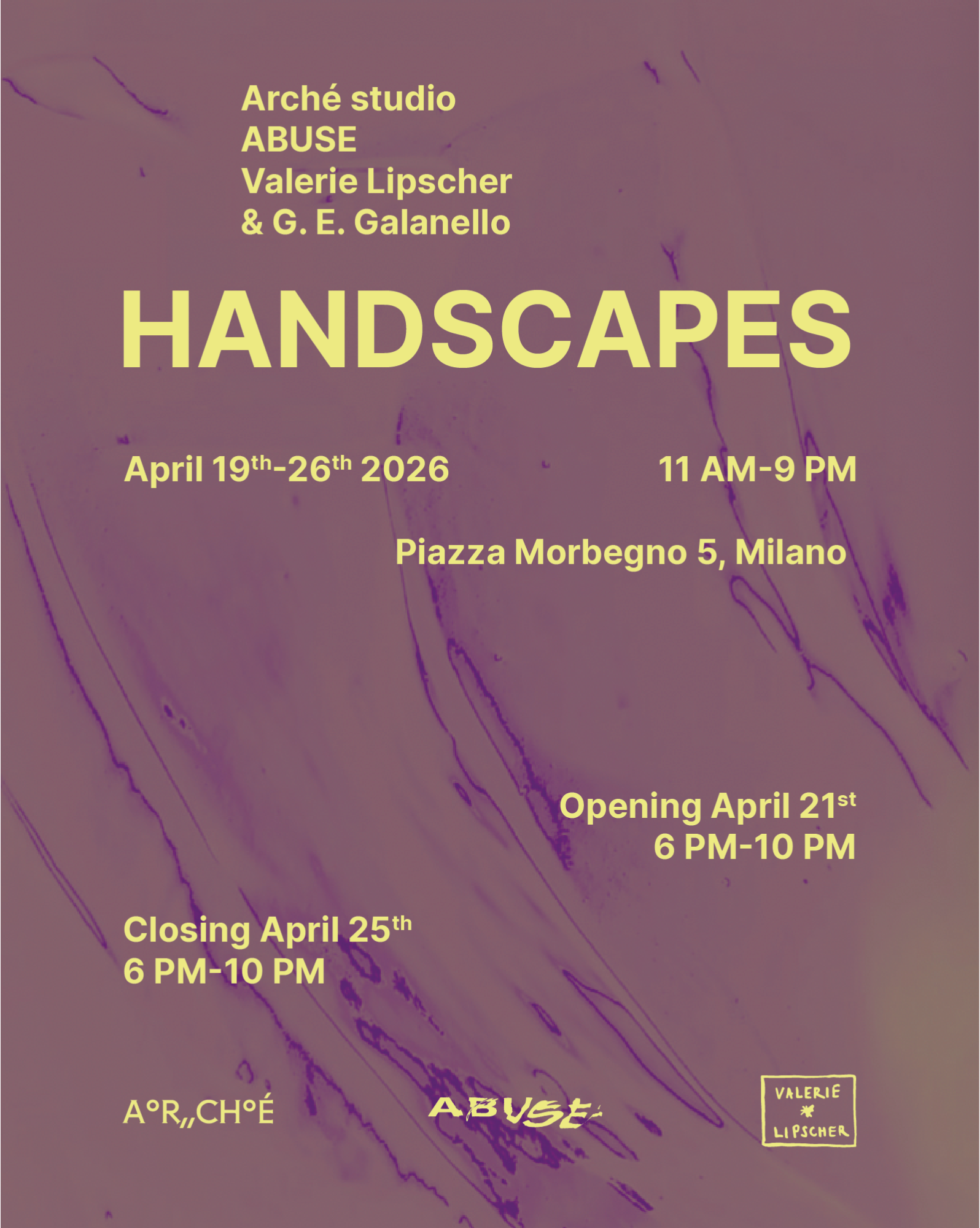
Handscapes brings together three practices that use handmaking to explore wool, clay, and wood. Resisting industrial uniformity, the exhibition celebrates matter, memory, and the intimate dialogue between human gesture and landscape.
The exhibition Handscapes arises from the intersection of three distinct paths that elect «handmaking» as a primary tool for territorial investigation. What unites Valerie Lipscher, Thomas Legler (Arché), and Abuse Studio is the attitude of resistance to industrial uniformity through research on raw matter and the celebration of its inherent constraints. Whether working with wool, clay, or timber, the starting point is always an element drawn from the landscape – natural or urban – and transformed through a slow, conscious, physical gesture. In this space, the hand becomes the bridge that crystallizes the memory of a place into a unique object, exploring the boundaries between the built environment and the sensitivity of the material in its pureness.
The practices of these designers go beyond production; it is an act of safekeeping. Wool becomes a tactile painting, clay serves as an archive of the subsoil, and wood modulates itself according to the laws of its own growth. Handscapes is an invitation to rediscover the physical origins of our surroundings, where form is never imposed but emerges from a silent dialogue between humanity and Earth.
Handscapes opening hours
From Sunday, April 19th to Sunday, April 26th, 11AM-9PM
Opening: Tuesday, April 21st, 6PM-10PM
Finissage: Saturday, April 25th, 6PM-10PM
Works
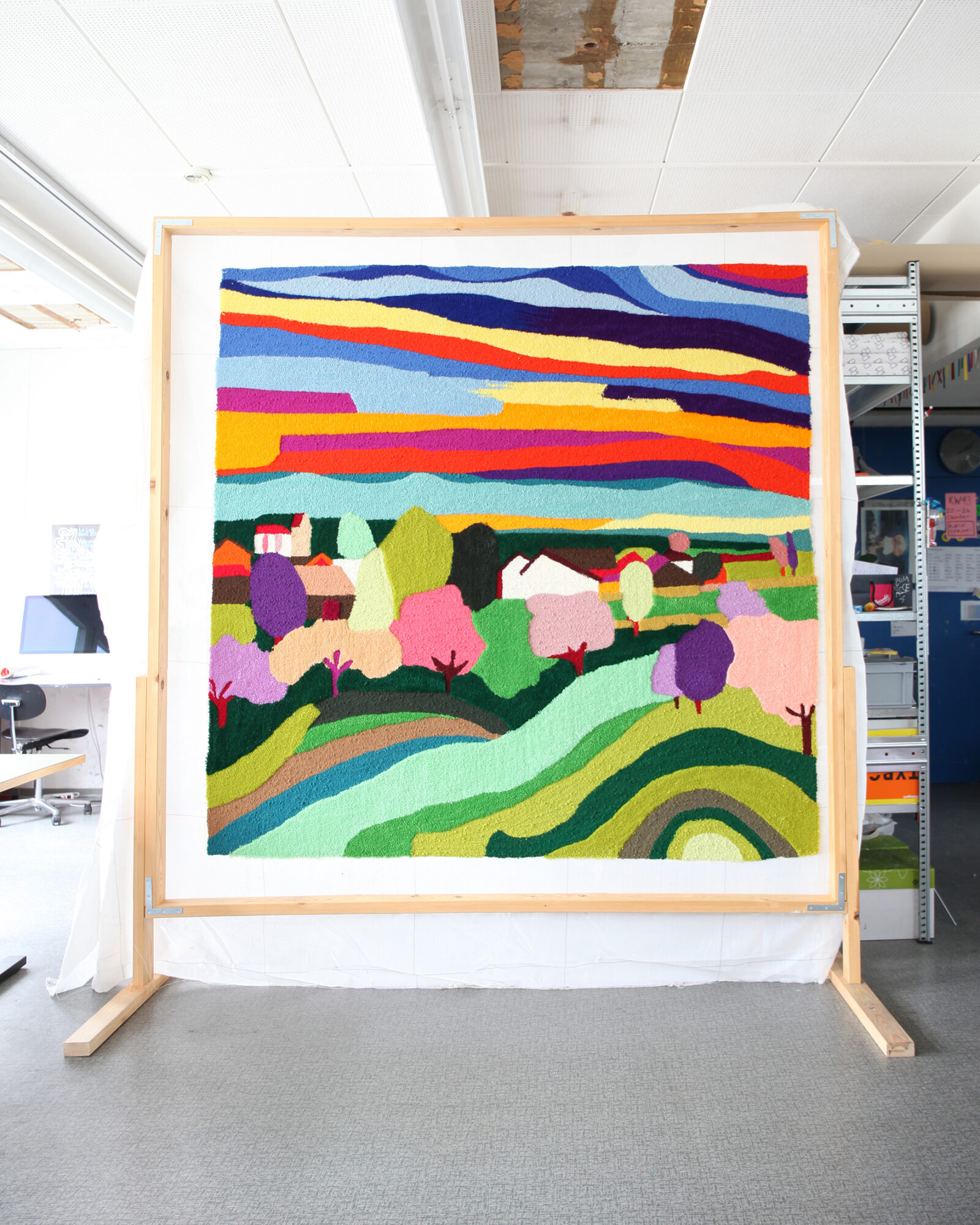
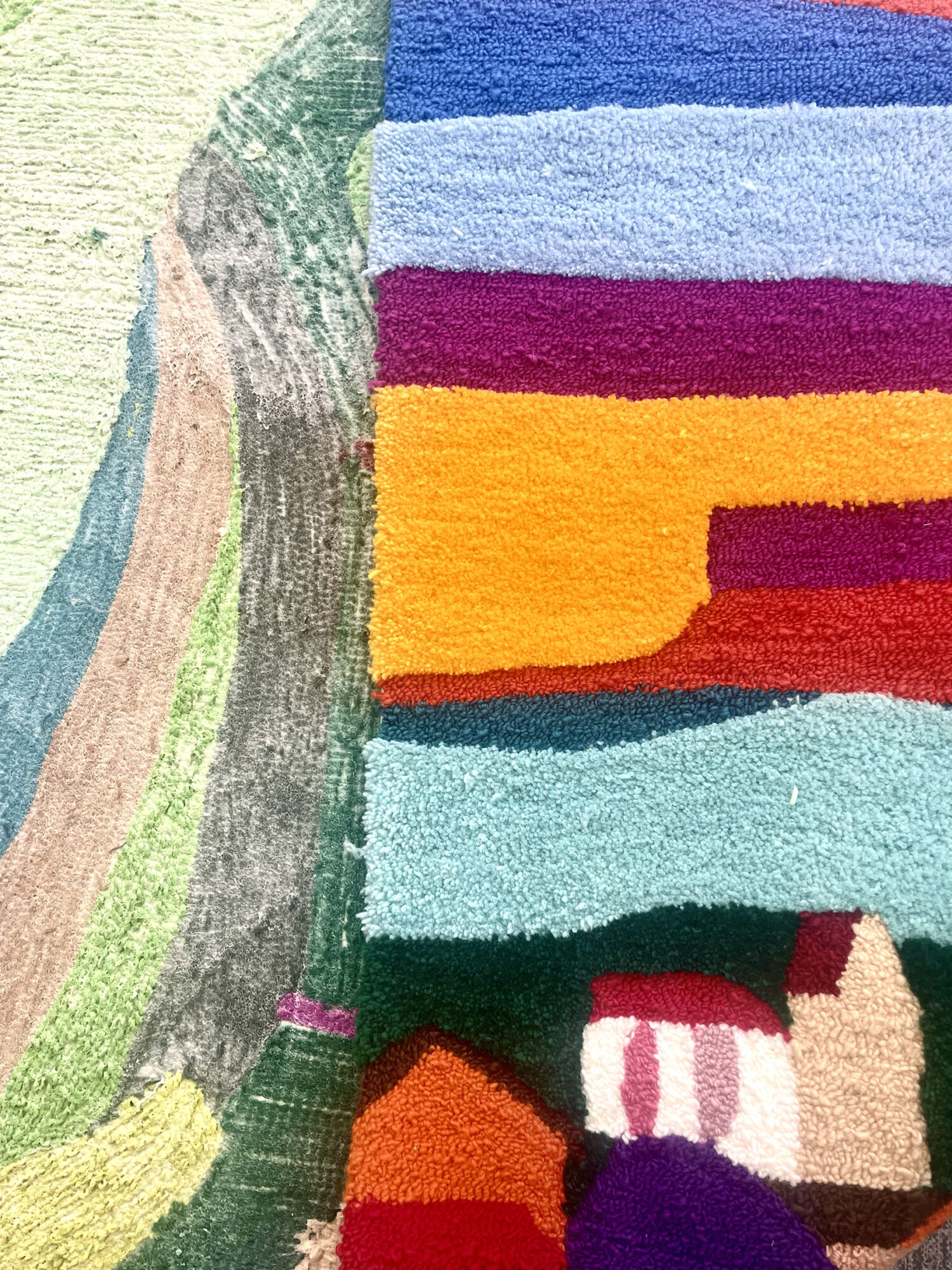
Mother’s Hood (2025)
Tufted wool on canvas, 200 x 200 cm
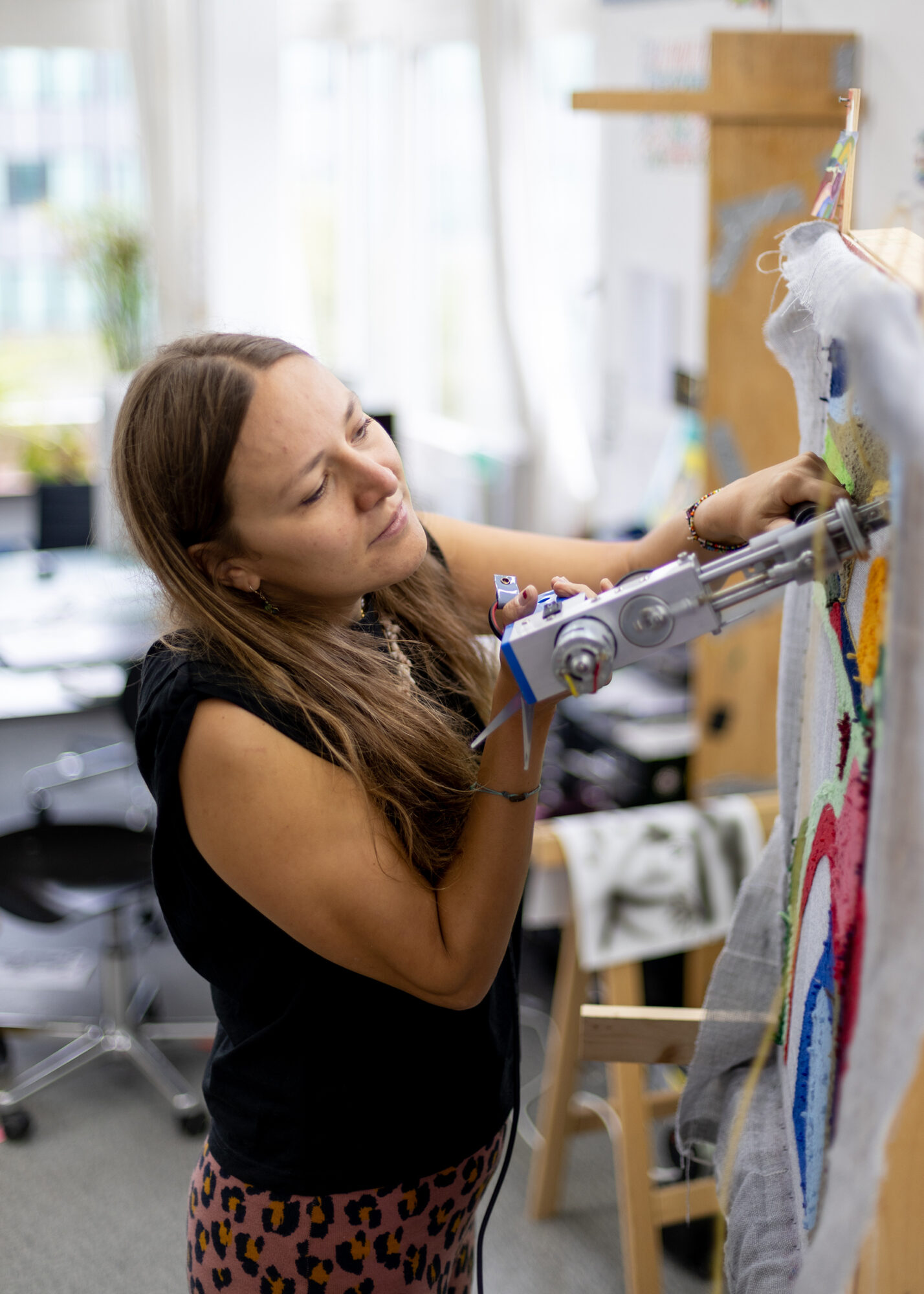
Valerie Lipscher presents Mother’s Hood, a monumental work of tufted wool on canvas that translates childhood memories and maternal influence into a tactile, hilly landscape. The use of tufting allows for «painting with thread,» transforming the carpet into a vibrant and spontaneous surface. As a child, Valerie frequently visited her mother’s hometown in the canton of Solothurn, later returning with her family to help in the bakery after her grandfather’s death. These experiences shaped her sense of memory and belonging. Since becoming a mother, she has reflected more deeply on maternal influence and her upbringing.
Motherhood is central to her artistic practice, echoing traditions of women artists who used domestic techniques like embroidery, knitting, and weaving. By working with wool and carpets, she translates drawing into a tactile form while honoring these histories. Through large-scale tufting, she introduces a more immediate, physical process, creating expressive works that balance control and spontaneity, and reinforcing a dialogue between history, material tradition, and contemporary artistic expression.
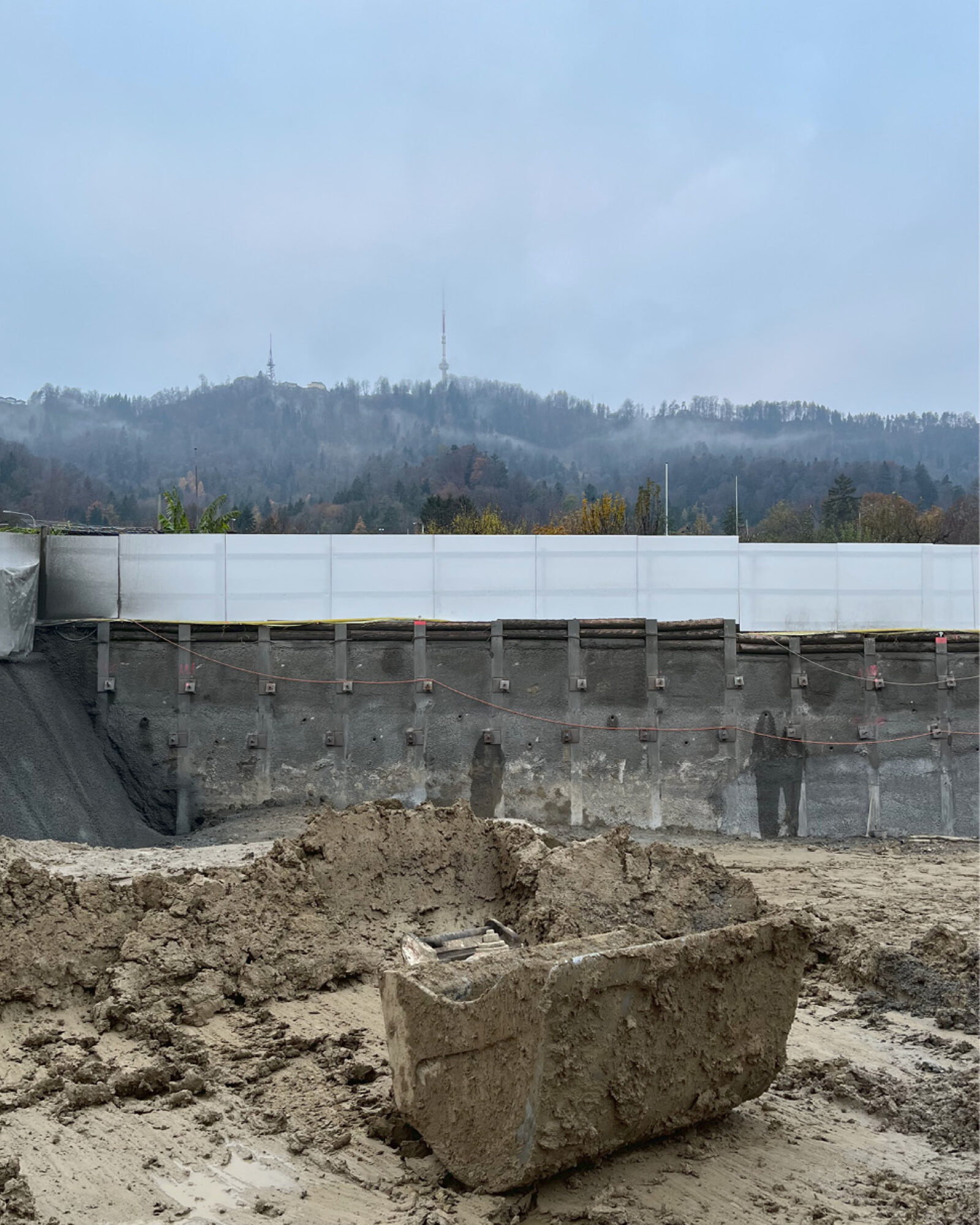
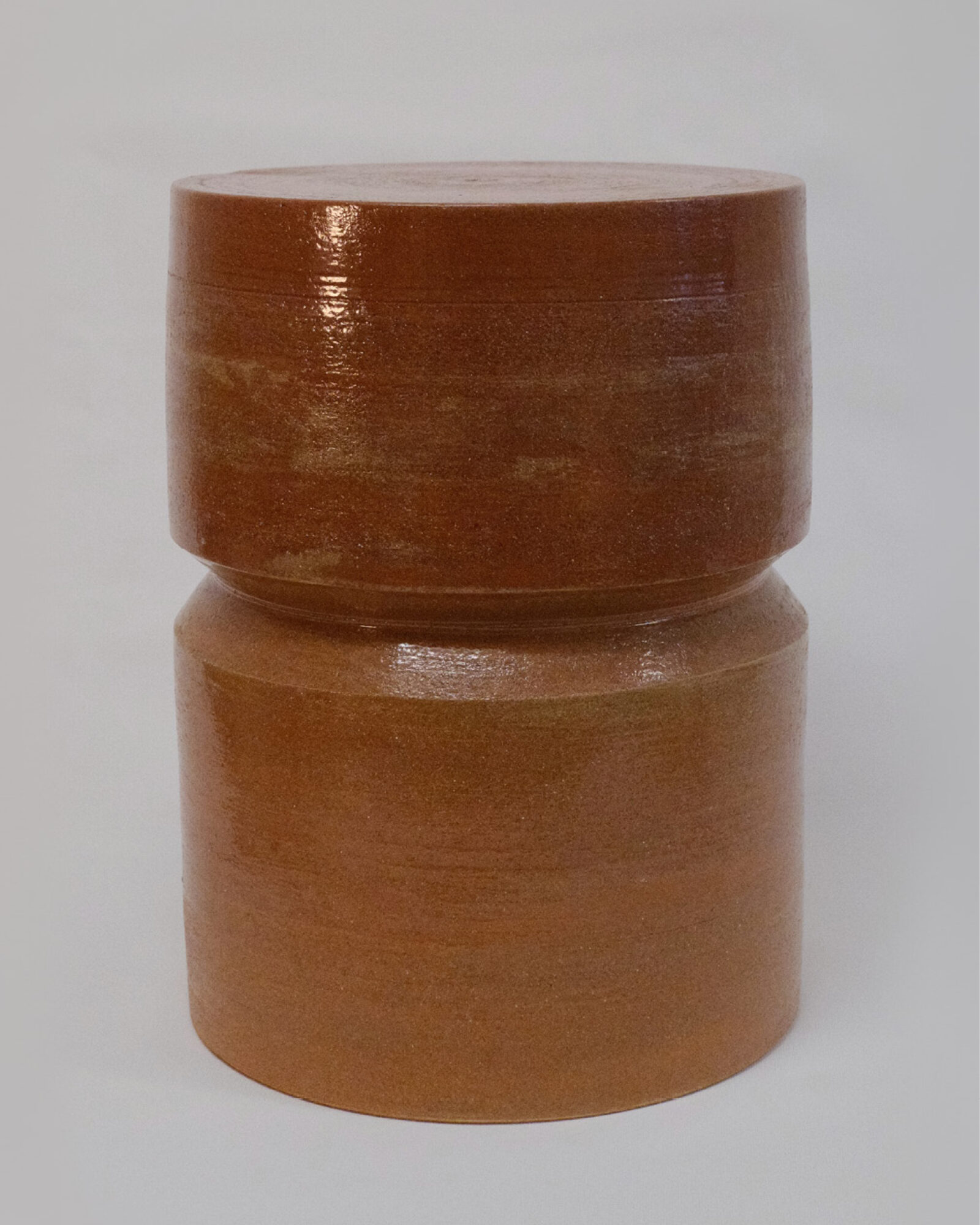
Recovered Clay (2024 – ongoing)
Terracotta, Clear glaze, various sizes
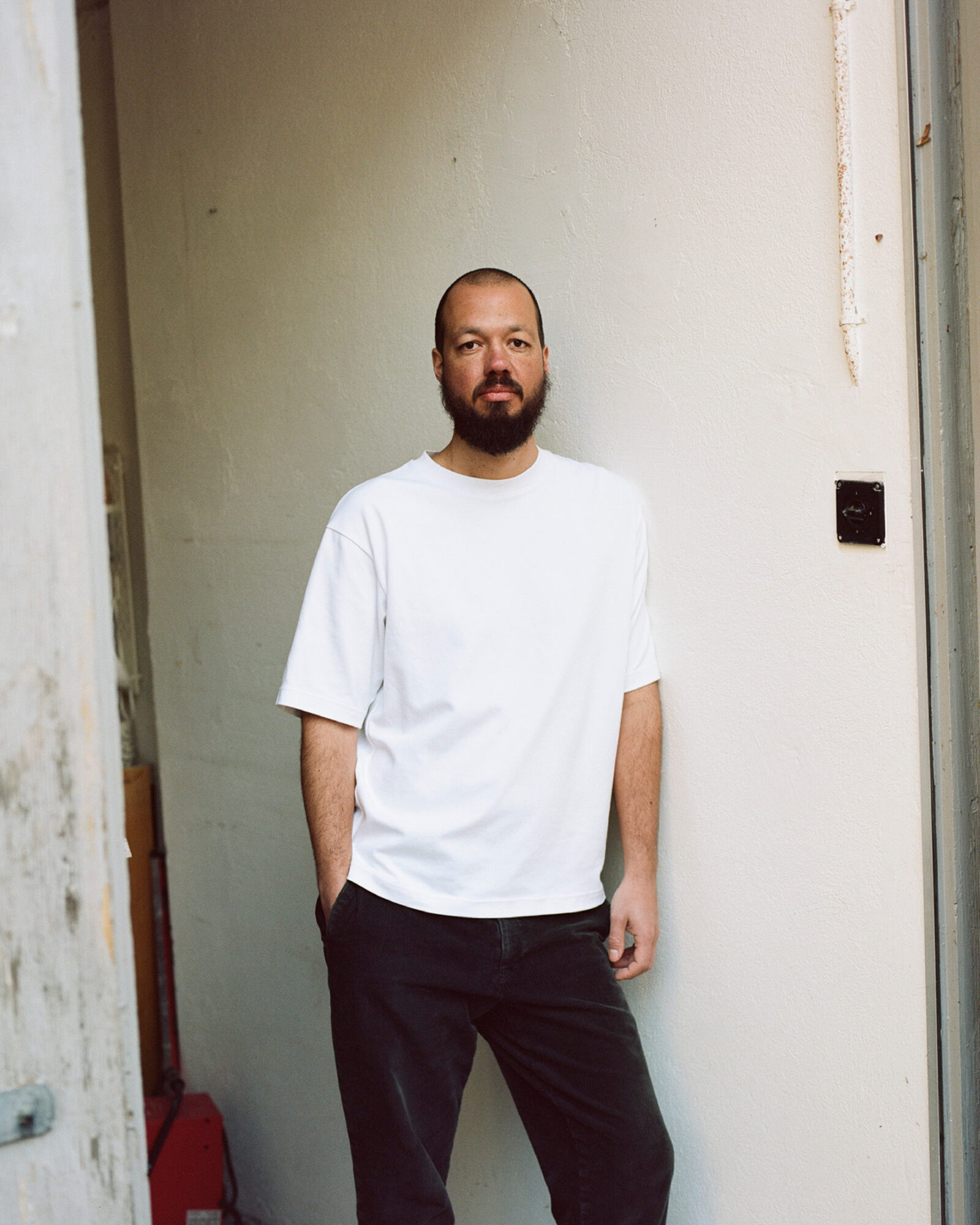
Thomas Legler (Arché Studio) showcases Recovered Clay, a series of one-of-a-kind pieces created from earth collected directly from construction sites. Without modifying the sourced material, the works preserve the original color palette of the urban subsoil, fixing in ceramic the temporary memory of a city in constant transformation.
As cities transform, large amounts of soil are excavated and treated as waste. These materials become the starting point of the work: brought into the studio, they are observed and cleaned while preserving their mineral identity. No pigments or oxides are added; colors and textures arise from the soil and firing. Each piece becomes a custodian of hidden subterranean memory. Each batch forms a unique, unrepeatable record of a place and moment, captured before being buried again beneath concrete. Thus, the works embody invisibility and transformation, linking material origin to urban change, and inviting reflection on cycles of visibility and disappearance in the built environment.
1000 Collection (2025)
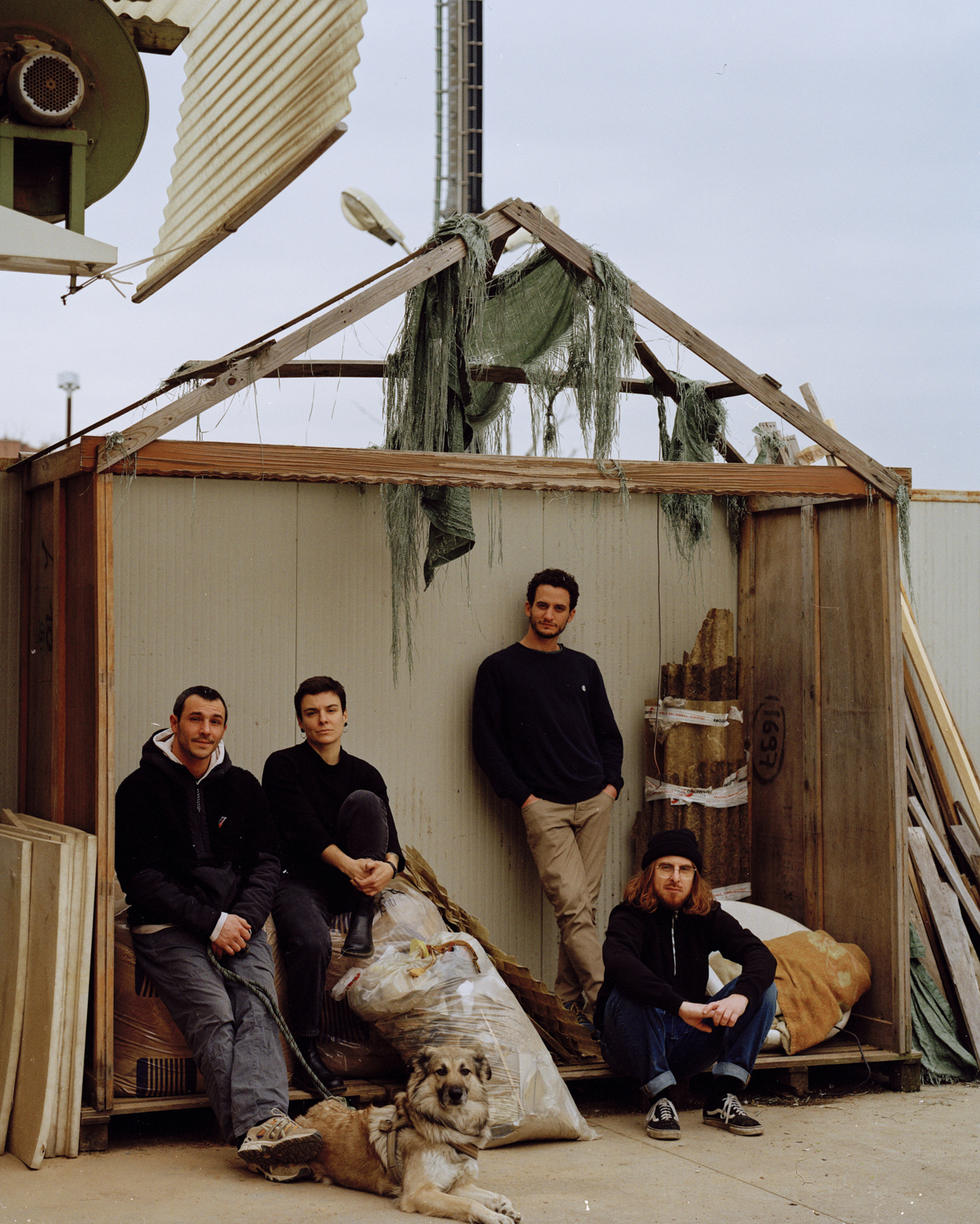
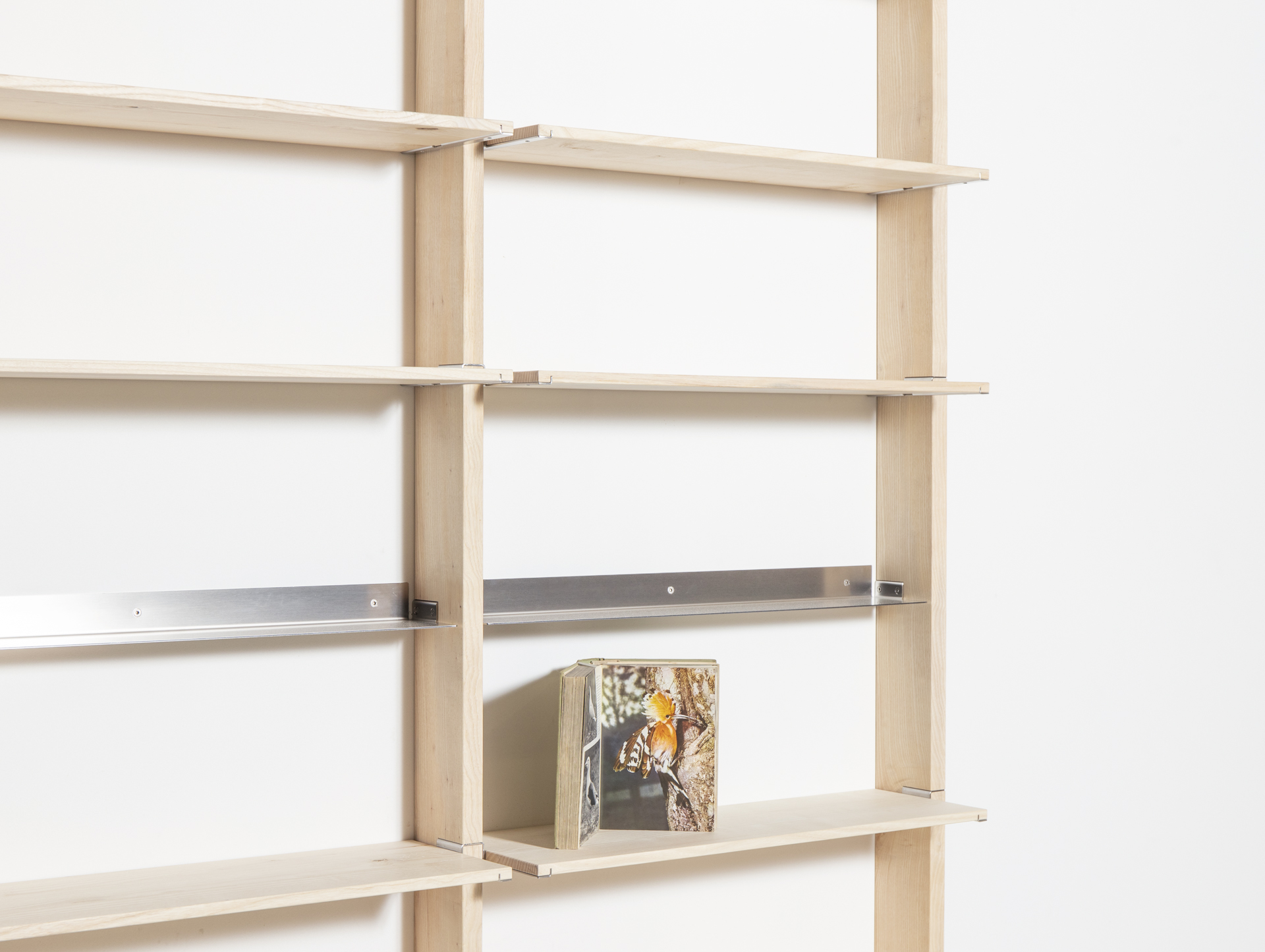
Abuse Studio introduces 1000 Collection, featuring the 1000C seat and the 1000S rack.
This collection is the outcome of a process where design is continuously challenged by the making process, and where the limits of woodworking become the framework for the final form.
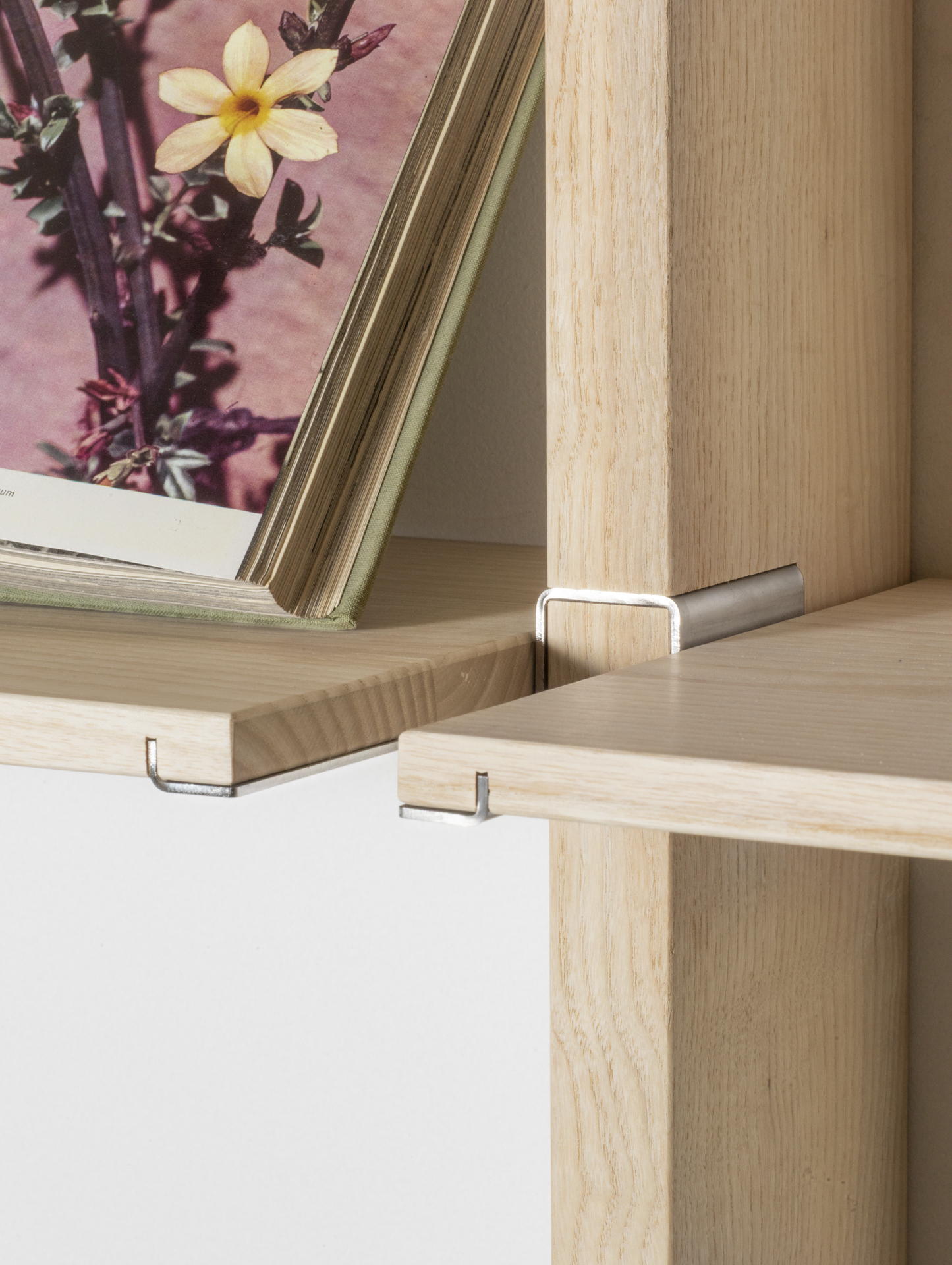
Using solid wood sourced from the forests of Lombardy and Piedmont, combined with integrated steel sheets, the project allows form to emerge from the constraints and possibilities of the material. Standard dimensions, available sections, machining limits, and the behavior of wood guide each decision, reversing traditional design logic so that form results from efficient cutting, assembly, and repetition. Joinery plays a central role, with visible, simple connections that celebrate the honesty of construction while avoiding complex tools. This approach minimizes waste, reduces production time, and ensures consistency, reflecting an ongoing dialogue between design and manufacturing.
1000S Rack: solid ash, Scotch-Brite stainless steel, L1600xH2400xD240 cm (The steel sheet shelves anchor the solid wood uprights to the wall. The runners, dry-fitted onto the uprights, serve both as shelf supports and as a connection between the uprights themselves.(1000 C Seat: solid ash, Scotch-Brite stainless steel, L1600xH450xW350 cm(The entire structure of the bench, made of solid wood, is solved with a single steel sheet that serves multiple functions: resisting the bending of the seat, providing a static constraint to the entire framework, and offering an additional shelf.